Like a lot of kids growing up in the 90s, I was obsessed with sports cards.
There was something magical about ripping open a fresh pack and hoping your favorite player was inside. Maybe it was a rookie card. Maybe it was a shiny insert. Maybe it was worth nothing at all. But none of that really mattered at the time. The fun was in the chase.
At some point, life happens. School, work, careers, mortgages, responsibilities. The card boxes get packed away in a closet or left at your parents’ house. For years, I barely thought about them.
Then recently, I found myself getting pulled back into the hobby.
Part of it is nostalgia. Sports cards reconnect you to a simpler time. A certain player or card design can instantly transport you back to being twelve years old sitting on the floor sorting cards into plastic sleeves.
But another part of it is something deeper: economics.
As I’ve gotten older and spent years working in wealth management and investing, I started realizing how similar collecting sports cards can feel to owning stocks.
At the core, both involve belief in future value.
When someone buys the rookie card of a young quarterback, they are essentially making a projection. They believe that player’s future accomplishments, popularity, scarcity, and legacy will increase demand over time. That is not entirely different from buying shares of a company because you believe its earnings and influence will grow in the future.
A sports card, in many ways, is a tiny ownership stake in a story.
Collectors analyze trends. They study supply and demand. They debate market timing. They speculate on upside. They hope patience pays off. Sound familiar?
Of course, there are major differences. Sports cards are not productive assets like businesses or stocks. A card does not generate earnings or cash flow. It is ultimately worth what another collector is willing to pay for it. That makes the market emotional, volatile, and sometimes irrational.
But honestly, that is part of what makes it fun.
There is also something refreshing about an investment that comes with memories attached to it. A stock ticker rarely reminds you of summer afternoons watching games with your dad or your friends. A sports card can.
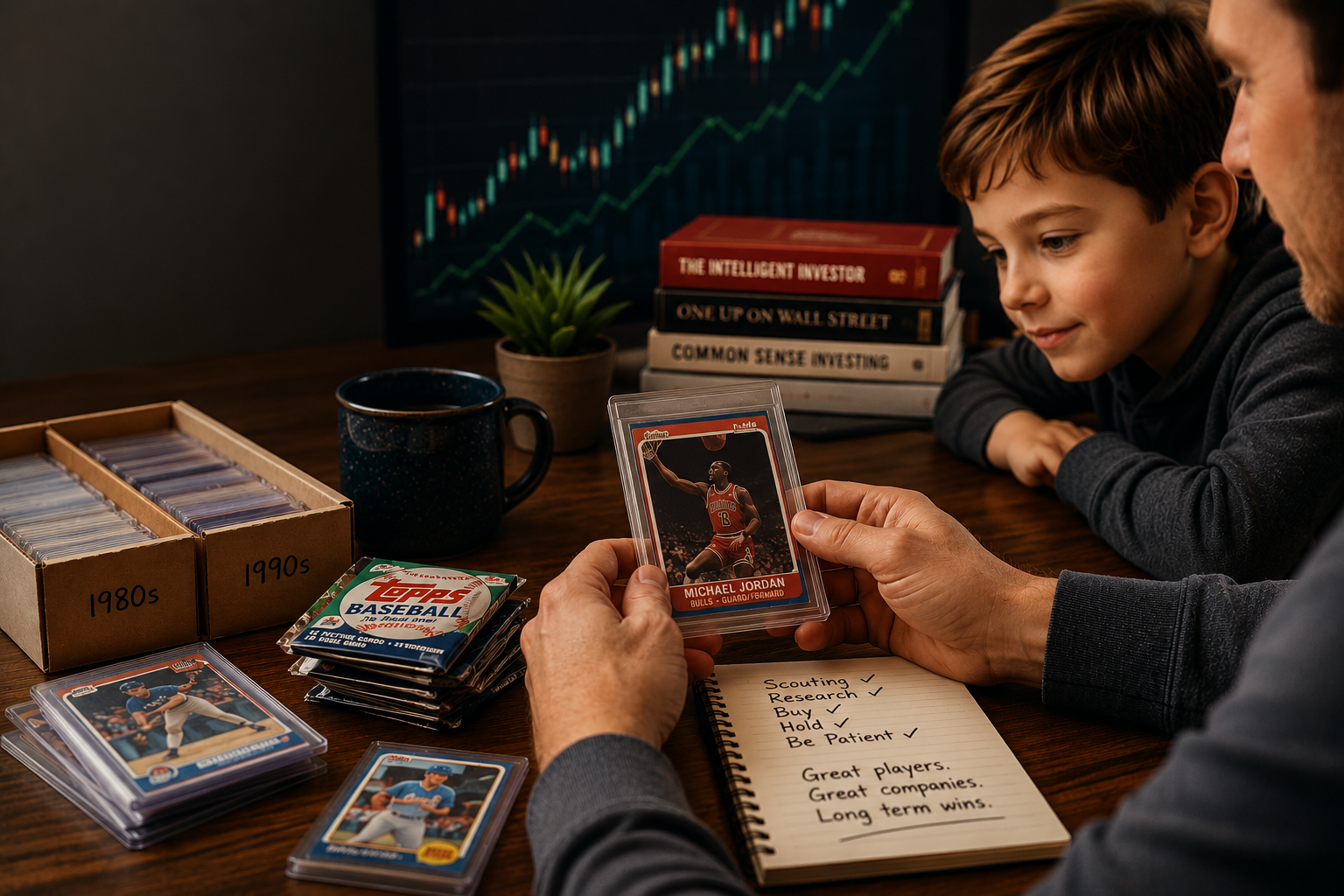
I think another reason I’ve revisited the hobby is the idea of eventually sharing it with my son as he gets older.
There is something timeless about collecting. Even in an era where entertainment is dominated by phones, streaming, and constant notifications, opening a pack of cards still feels surprisingly real. It slows things down. It creates anticipation. It creates conversation.
I look forward to the day when we can sit at a table together sorting cards into piles, debating players, learning statistics, and following careers over time. Sports cards naturally teach patience in a world that increasingly lacks it. Rarely does value happen overnight. Sometimes a player develops slowly. Sometimes injuries change the trajectory completely. Sometimes the market gets ahead of itself. Other times, collectors overlook greatness until years later.
That uncertainty mirrors investing in many ways.
The best collectors, much like long-term investors, usually understand the importance of discipline. Not every flashy new release becomes valuable. Not every hyped rookie turns into a Hall of Famer. Trends come and go. Markets rise and cool off. The people who tend to do best are often the ones who avoid emotional decisions and think long term.
Another interesting aspect of the hobby is scarcity. Modern card manufacturers have leaned heavily into numbered cards, limited print runs, autographs, and one-of-one releases. That scarcity creates value the same way limited supply can impact prices in other markets. A truly rare card of an iconic athlete can become highly desirable because there are simply not many available.
But even beyond the economics, sports cards connect generations.
A father might collect Mickey Mantle cards. His son grows up collecting Michael Jordan. His grandson collects modern quarterbacks and basketball phenoms. Different eras, same excitement.
Some hobbies disappear as we grow older. Others evolve with us.
Collecting sports cards now feels different than it did when I was a kid. Back then, it was pure excitement. Today, it blends nostalgia, investing, sports history, economics, and the simple joy of collecting.
And honestly, in a world increasingly dominated by screens and digital everything, there is something satisfying about holding a piece of sports history in your hands.
Maybe someday I’ll pull a card worth thousands. Maybe I won’t.
But I’ve come to realize that the real value of the hobby was never just about money in the first place.

